
From airfield to innovation laboratory
Lausitz Science Park is taking shape in Cottbus as a science and business park with ambitious plans to give Lusatia a new perspective
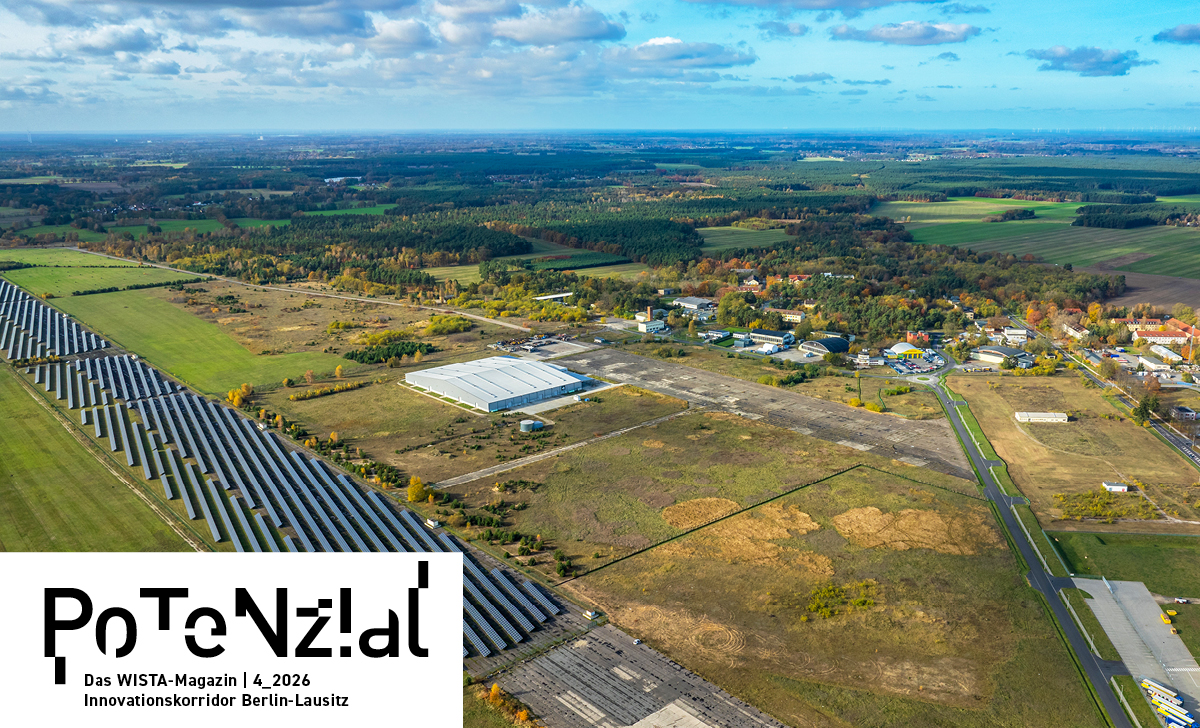
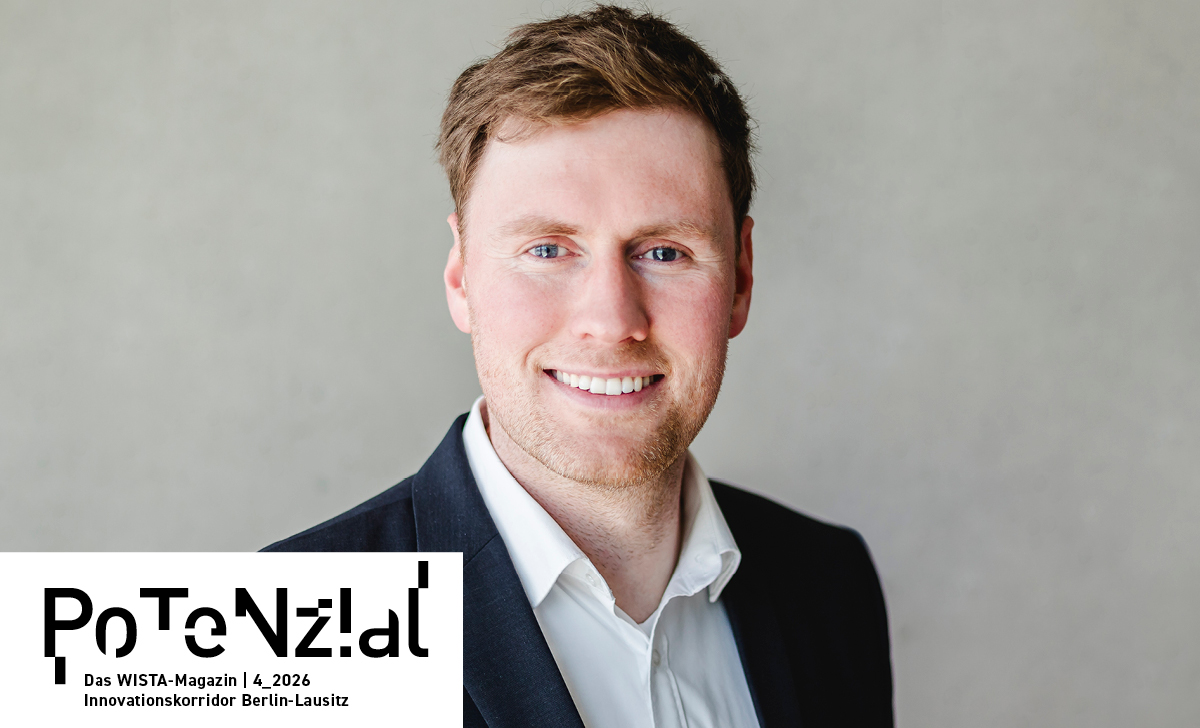
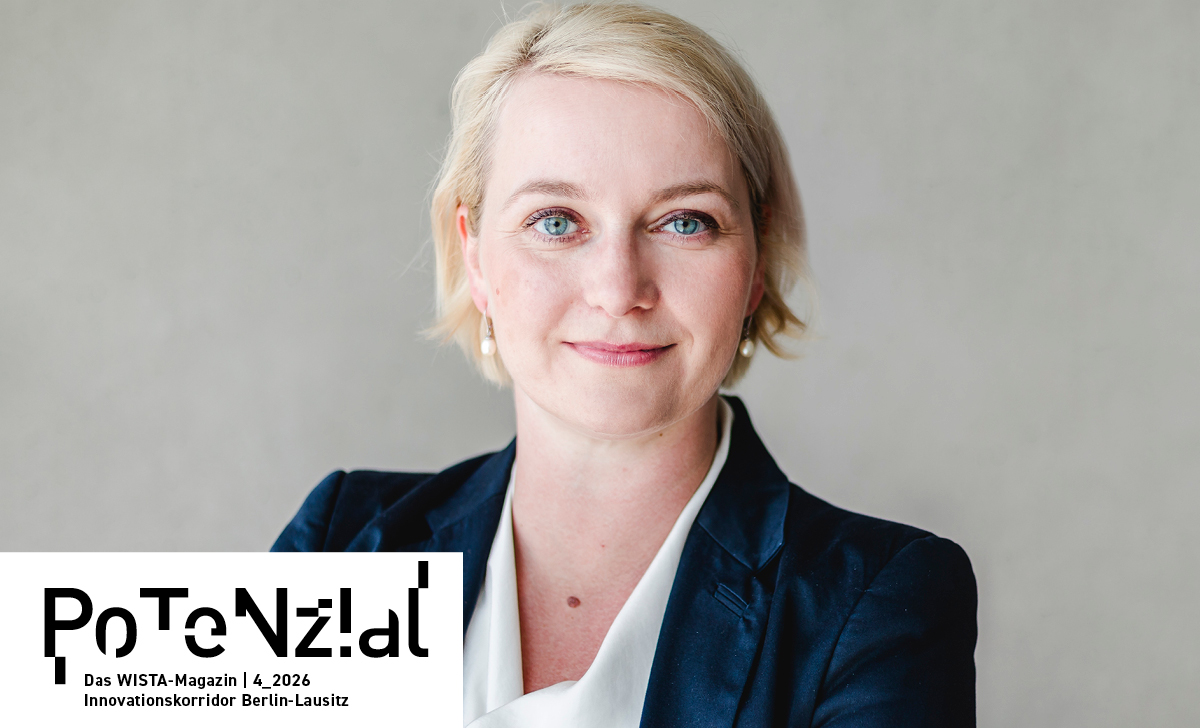
Much of the site is still under construction. Roads need to be built, land developed and buildings planned. But anyone speaking to Julia Raunick and Markus Schwenke, who coordinate the planning and development phase of Lausitz Science Park at Brandenburg University of Technology Cottbus-Senftenberg (BTU), quickly realises that the real work begins long before the first concrete is poured.
“This is a project that will span generations,” says project head Markus Schwenke. It will take five or even ten years before only part of what is planned becomes visible. By 2031, the core area of the science park, formerly a military airfield, is expected to be fully serviced with modern infrastructure, 5G networks and research facilities for companies and scientific institutions. At the same time, a new district is planned in the north of Cottbus: urban, well connected and closely linked to BTU. Schwenke describes a vision of short distances, cycle routes, public transport and generous recreational spaces.
Its proximity to the city centre and location along the Innovation Corridor towards Berlin are just as important as its connections to Dresden and Eastern Europe.
While the long-term vision is already remarkably clear, much of the day-to-day work is still in the development phase. Infrastructure works on the core site are under way, and the first research institutions are already building a shared campus. In future, the Fraunhofer Society, the German Aerospace Center and several Leibniz institutes will all have a presence there.
At the same time, a new operating company, Lausitz Science Park GmbH, is being established. The company is majority-owned by the City of Cottbus and BTU, with WISTA Management GmbH also holding a stake. According to Schwenke, this structure has been crucial to the project's success. The university alone could not deliver a project of this scale, not least because much of the 420-hectare site is owned by the city.
The project draws inspiration from established examples such as Technology Park Adlershof. At the same time, both project managers are keen to emphasise the differences. Lusatia is not a city of millions with a rapidly growing population. Precisely for that reason, they believe the site must develop its own distinct identity. While the experience of other science parks is valuable, it cannot simply be replicated. The team therefore began building international partnerships at an early stage—with Poland, Austria, Spain and Scotland. Learning from other regions helps them avoid mistakes while adapting successful approaches to local conditions.
A science park consists of far more than buildings. What matters is a thriving innovation ecosystem, with start-ups, networks and close collaboration between research and industry. This is where Raunick sees one of Lusatia's greatest strengths. For years, BTU has been educating highly qualified international students, many of whom would like to remain in the region after graduation. Around 45 percent of the university's students now come from outside Germany. In future, the Science Park aims to offer them opportunities in fields such as decarbonisation, artificial intelligence, sensor technology and health sciences.
To help international graduates become entrepreneurs, researchers and innovators in the region, the science park is increasingly developing its own formats. Language Lounge provides an informal meeting place for everyone working, studying, conducting research or launching a business at the park who would like to practise languages in a relaxed setting. Meanwhile, the Innovators Club brings together students and aspiring entrepreneurs to develop their first business ideas with the support of mentors and experienced founders.
Today, many international students are keen to launch ventures of their own rather than simply pursue traditional career paths. The science park therefore aims to engage with them early, before ideas develop into start-ups. Schwenke sees this as a decisive factor. Major success stories were rarely planned. The important thing, he says, is to inspire as many people as possible to explore entrepreneurial ideas in the first place.
Behind all of this lies the wider challenge: Lusatia's structural transformation. For Raunick, that is the science park's central mission. The goal is not simply to create jobs in the short term, but to build long-term value creation for the region.
That is why the project team is also working to raise the science park's profile at an early stage through events, networking formats and public appearances. The symbolic value of these moments should not be underestimated, says Raunick. It is only when people see the first sod being turned that many begin to believe a vision can really become reality.
Rico Bigelmann for Potenzial
Lausitz Science Park - BTU Cottbus-Senftenberg