
How Germany's most intriguing emerging region is growing between Berlin and Cottbus
The Berlin–Lusatia Innovation Corridor aims to bring science, industry and quality of life closer together
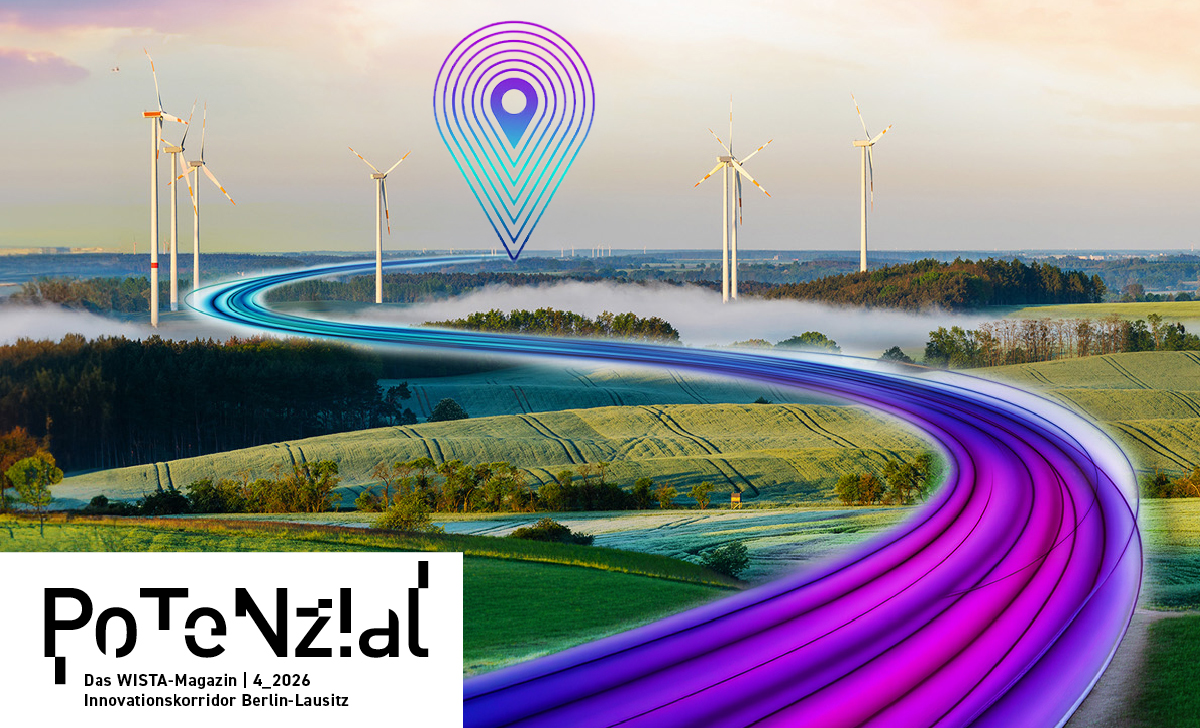

What long sounded like a mere political vision is now beginning to take concrete shape. The Berlin–Lusatia Innovation Corridor aims to bring science, industry and quality of life closer together, creating a momentum that is attracting attention across Germany.
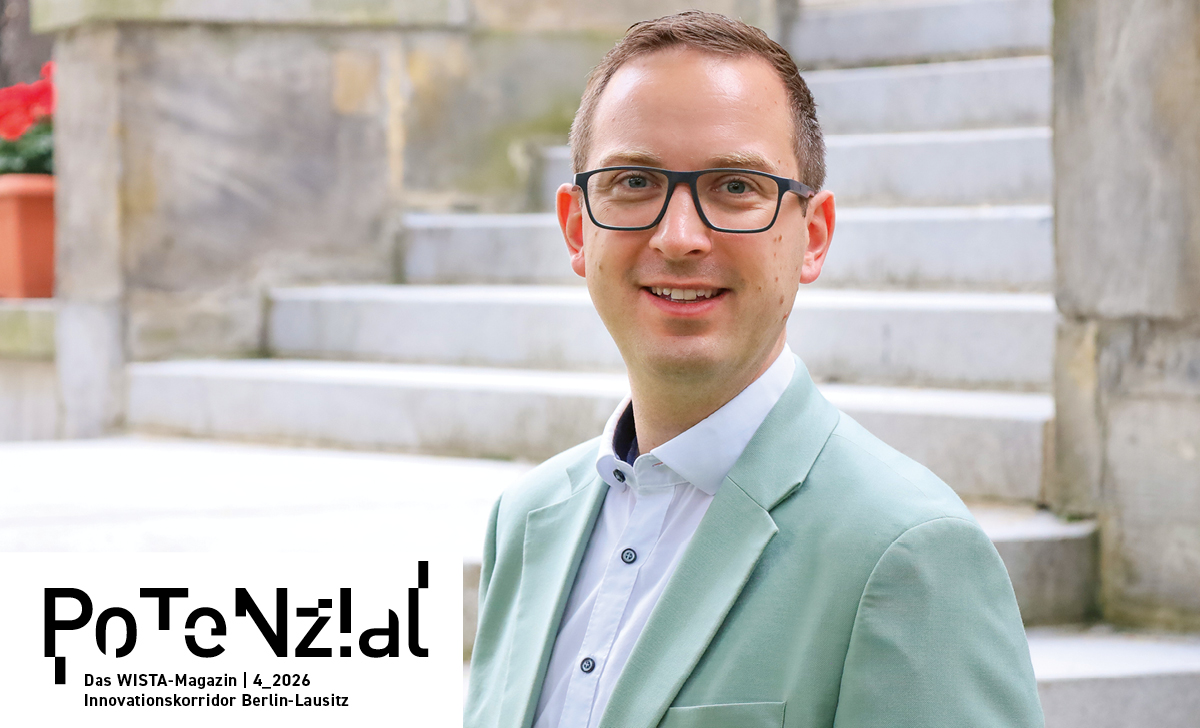
“There is far less need to explain the concept today than there was just a few years ago,” says Lilli Zylka of WISTA Management GmbH. Together with Janine Schollbach and Sebastian Sammt of Wirtschaftsregion Lausitz GmbH (Economic Region Lusatia), she coordinates the development of the Innovation Corridor, a project initiated by joint resolutions of the Berlin and Brandenburg state governments that is jointly managed by the two organisations. The aim is the strategic development of the region along the Berlin–Cottbus axis to harness the opportunities created by structural change. Rather than acting as conventional project managers working towards fixed targets and performance indicators, the team sees itself as connecting a region in transition. The corridor is not a time-limited funding programme with rigid objectives, Zylka explains. Instead, its purpose is to bring people together, initiate collaborations and make shared development pathways visible.
A central focus is the energy transition. For Sammt, this is only logical. Lusatia has decades of expertise in the energy sector, and the challenge now is to carry that knowledge into a sustainable future. “We know our way around electricity and energy,” he says. “It’s now about transforming that expertise.”
The substantial funding is already having a visible impact on the region. Of the 10.3 bn. euros in structural support earmarked for Brandenburg's Lusatia region, around 6 bn. euros are being invested in science and research. New institutions are taking shape, including facilities operated by the German Aerospace Center, KEI Competence Centre on Climate Change Mitigation in Energy-Intensive Industries, and the new Carl Thiem Medical University of Lusatia. Nowhere is this transformation more visible than at the Lausitz Science Park in Cottbus, where a research and innovation campus with international ambitions is being developed on the site of a former airfield.
At the same time, sites for industrial production are to be developed along the corridor, providing the space that Berlin increasingly lacks. “Innovation happens in the centres, but production needs room to grow,” says Sammt. That, he believes, is the opportunity offered by the region between Berlin and Lusatia. Places such as Lübbenau, Wildau and the Schwarze Pumpe industrial estate are expected to become part of new value chains, supported by improved infrastructure and faster mobility.
A key element is the expansion of the railway line between Berlin and Cottbus. Once completed, the journey time is expected to fall to less than an hour. For those behind the project, however, it is about much more than transport. It is about creating a shared region for growth and development.
Yet the Berlin–Lusatia Innovation Corridor is about more than major infrastructure projects and billions in public funding. Its real strength lies in the relationships between people, Zylka emphasises. Personal encounters are often the starting point for new collaborations. Networking events, company visits and smaller exchange formats held along the entire corridor regularly bring together representatives from science, industry, local communities and public administration. The first partnerships are already emerging between research institutions in Berlin and industrial companies in Lusatia, particularly in fields such as energy technologies and sustainable manufacturing.
Coordinating so many different interests remains a challenge. Expectations and perspectives must continually be brought into alignment. Even so, those involved are above all driven by a sense of optimism. “The strongest image I take from this work is of people who are motivated and genuinely believe that everyone benefits when we work together,” says Zylka. That the region's development is now also being reflected in economic performance is borne out by a recent study by the German Economic Institute. According to the report, Cottbus is currently Germany's most dynamic economic region. To Sammt, this is a clear signal: “We can't claim direct credit for that. But our partners and we are certainly part of that development.” Zylka adds: “Between Berlin and Lusatia, we're seeing more than economic transformation. A shared understanding of the region's future is beginning to emerge.”
Rico Bigelmann for Potenzial
Berlin–Lusatia Innovation Corridor