
Connected spaces
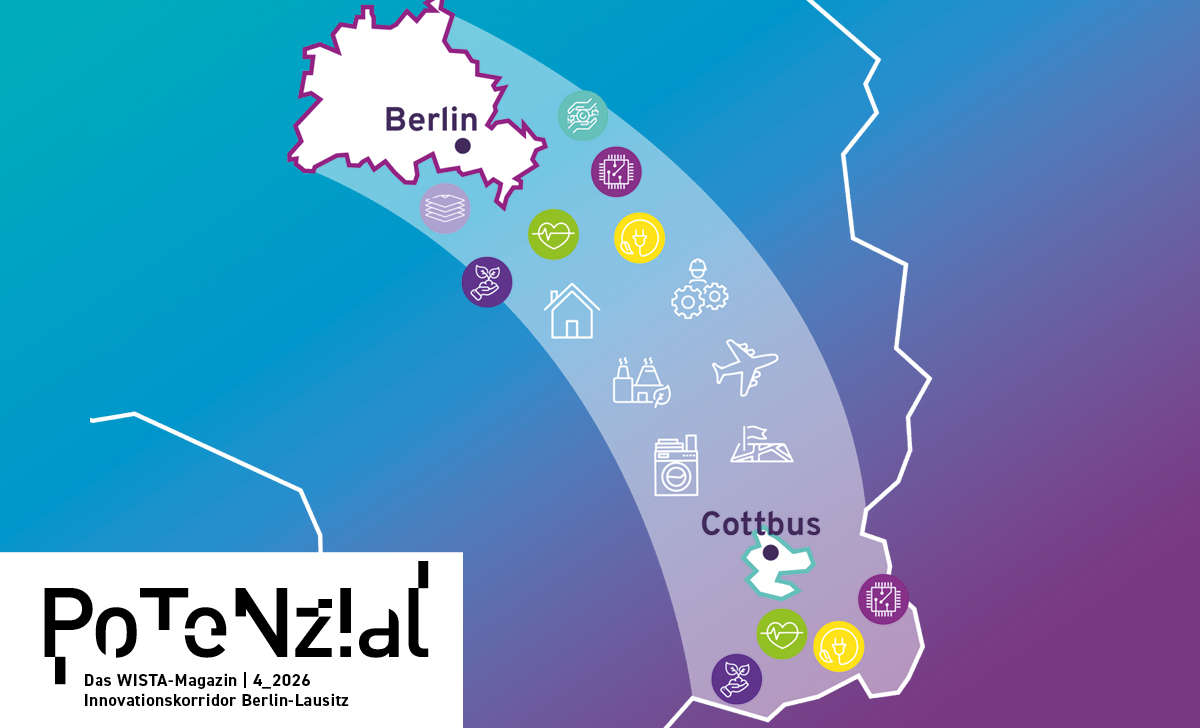
A new development corridor is taking shape between Berlin and Lusatia, bringing science, industry and rural communities closer together. At its heart are new ideas about the future of work, innovation and everyday life.
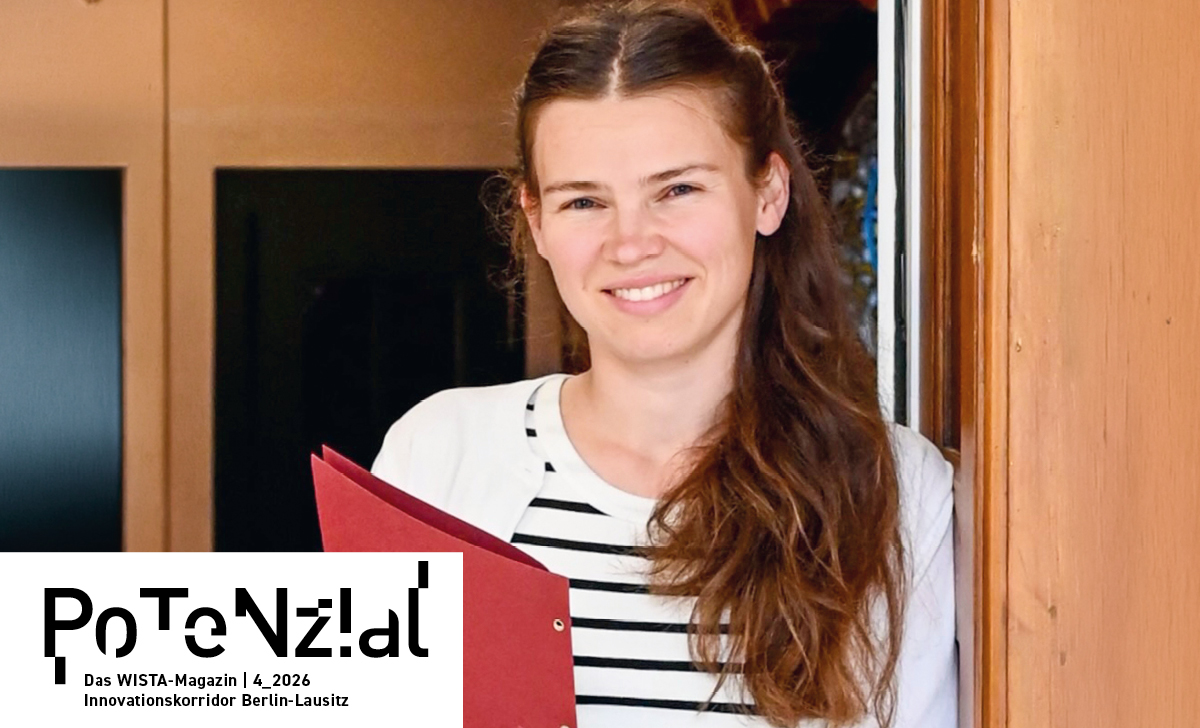
In the past, people usually chose where to live based on the distance to their workplace. Today, that logic is changing. “Geographical distance has become much less important than how quickly and flexibly a place can be reached, and how often people actually need to commute,” says Sarah-Juliane Starre from the Department of Urban and Regional Economics at Technische Universität Berlin. The economic geographer researches the spatial development of the Berlin-Brandenburg capital region and the Berlin–Lusatia Innovation Corridor.
The aim is to strengthen links between science, industry and new places of work along major transport routes.
Adlershof and the emerging Lausitz Science Park in Cottbus will serve as key hubs. Between them, new points of connection could emerge in the form of coworking spaces, commercial sites and production facilities.
The idea behind the Innovation Corridor is not entirely new. For decades, Berlin has expanded into the surrounding Brandenburg region along major transport corridors. International examples, such as Copenhagen's Finger Plan, have served as models.
Starre therefore describes the capital as a “star-shaped urban structure”, referring to Berlin's well-established Siedlungsstern model. The Berlin–Lusatia Innovation Corridor is regarded as a pilot project for a total of eleven planned development corridors. What is new, however, is the way these corridors are being conceived today. Rather than distributing funding as evenly as possible, the aim is to link up existing strengths in a more targeted way. Science and technology parks play a central role in this approach. “They are the anchor points of these development corridors,” says Starre.
Smaller towns and business parks along the route could also benefit. “For companies in Adlershof looking to expand their production capacity, Lauchhammer could become an attractive location because it offers sufficiently large sites at comparatively affordable prices,” she explains.
The prerequisites, however, are high-performance rail connections and robust digital infrastructure. The underlying idea has long been recognised in economic geography. Spatial proximity facilitates the exchange of knowledge, collaboration and innovation. Particularly important is what researchers refer to as tacit knowledge—experience and expertise that cannot easily be documented or transferred digitally. “Many innovations emerge through personal encounters,” says Starre. Collaborative projects and informal exchanges both play an important role.
Researchers describe this phenomenon as the “cafeteria effect”. The COVID-19 pandemic gave this development additional momentum. Many employees experienced for the first time that being in the office every day was not always necessary. Someone who only has to commute to Berlin once or twice a week is likely to view longer journey times differently than in the past. As a result, places such as Lübbenau become more attractive. Co-working spaces along railway lines could make it possible to distribute work and economic activity more flexibly across the region.
Following the coal phase-out, Lusatia is also reshaping its economy without abandoning its long-standing role as an energy region. “Lusatia is not reinventing itself from scratch,” says Starre. Instead, existing expertise is being transferred into new fields such as energy transition solutions, decarbonisation and hydrogen technologies.
At the same time, Starre cautions against viewing the Innovation Corridor simply as a direct link between Adlershof and Lausitz Science Park. Much of the area between them remains rural and heavily dependent on the car. Regional development, she argues, is about more than economic growth alone. “There is a great deal ofdiscussion about high technologies and major investments,” she says, “but everyday regional economies—tradespeople, small service providers and village shops—are often overlooked.” Environmental considerations also deserve greater attention. The area between Berlin and Lusatia comprises not only development sites but also sensitive natural and cultural landscapes.
In the long term, Starre sees an opportunity to think about Berlin and Brandenburg as a more closely connected region. “The greatest potential lies in combining the best of both worlds,” she says. Perhaps, in time, that will lead to a shared way of living.
Kai Dürfeld for Potenzial
Sarah-Juliane Starre - TU Berlin
Innovationskorridor Berlin – Lausitz