
The computer brain
The start-up Neurorium is developing biological computers from neural organoids
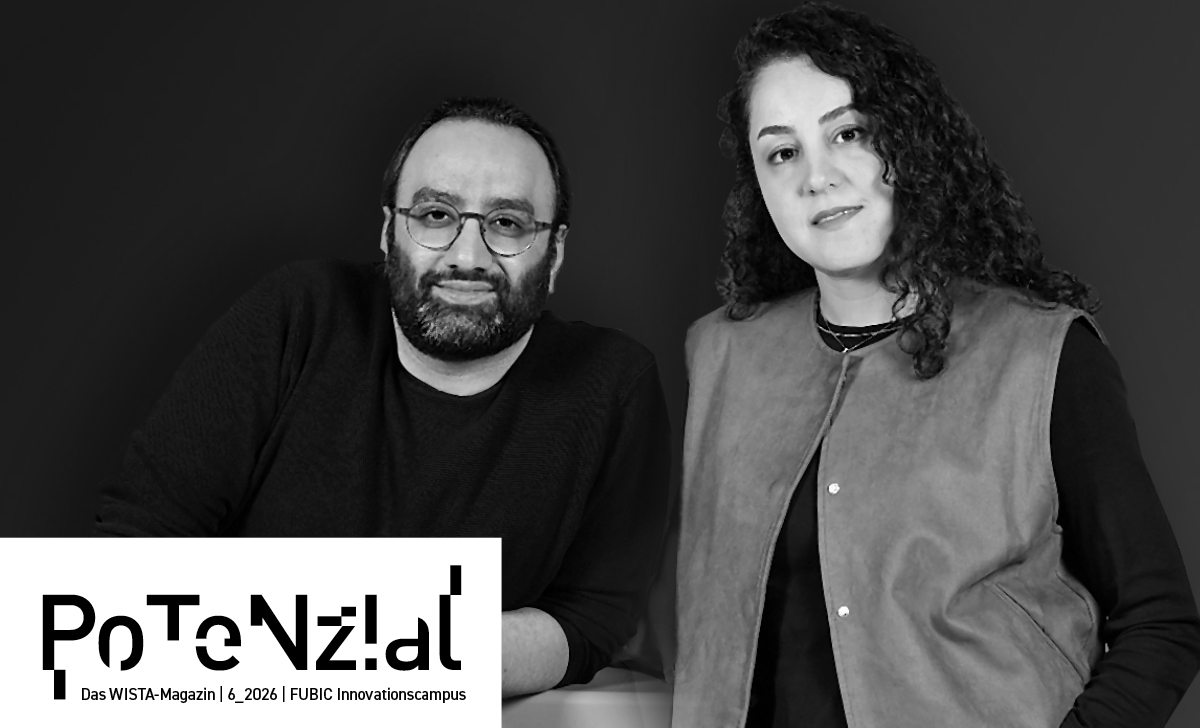
Organoids—tiny organs grown from stem cells—have traditionally been used to test active substances and cosmetics directly on human cells, without the need for animal testing. Neurorium is taking things a step further by using brain organoids as computers, and is already achieving impressive results. The advantage: Biocomputers based on brain cells require only minimal amounts of energy.
“No, no!” says Mohsen Sadeghi, co-founder and head of development at Neurorium, waving away the suggestion. “We don’t need cell donors.” The offer to donate a few of one’s brain cells to his start-up for its petri-dish computer was not entirely serious, either.
At Neurorium, the computing is done by so-called organoids. These are grown from human induced pluripotent stem cells (iPSCs). Organoids are clusters of heart, kidney, skin or even brain cells. Medical researchers, pharmaceutical companies and cosmetics manufacturers use them to test new active substances directly on human tissue, without taking the detour via animal testing. But using organoids for “post-silicon intelligence”—freeing AI from its dependence on silicon chips and energy-hungry data centres—is something new. The Berlin-based team can draw on established solutions and a network of highly motivated collaborators.
“After a few weeks, the neuronal cells in these organoids begin to form connections and communicate with one another of their own accord,” explains Sadeghi. This communication takes the form of weak electrical signals, which can be detected using suitable electrodes and, conversely, stimulated by applying electrical signals.
To do this, his team uses hair-thin needles fitted with microelectrode arrays, which are inserted into these intelligent clusters of cells. Similar electrodes are also a key component of cochlear implants for deaf people. There, they transmit sounds and speech, converted into electrical signals, to the cochlea, which relays them directly to the brain.
While leading a research group at Freie Universität Berlin, Sadeghi had already been experimenting with living neuronal cells when a crucial contact was made. “The Swiss company FinalSpark was researching in the same direction and had brain organoids. We were able to stimulate them remotely with signals and observe their responses in real time,” the founder recalls. This made it possible to investigate systematically how neuronal networks consisting of around 100,000 cells respond to stimulation, and how targeted input can prompt them to produce specific responses. Like complete novices suddenly finding themselves in front of the tens of thousands of controls of a music studio mixing desk, the team began exploring the cells’ responses by trial and error. They had a powerful tool at their disposal, however: the very technology their research is ultimately intended to advance—artificial intelligence. Even in weak signals disrupted by the cells’ own internal communication, AI can identify patterns where human observers would see only chaos.
Gradually, Sadeghi’s team is learning how the computer brain responds to different types of data input. The cells apparently can memorise the arrangement of pixels in an image and reproduce it. Videos on the Neurorium website show what the team can already prompt these talkative neuronal networks, now comprising 800,000 cells, to do. If the learning curve, which began in 2023, remains this steep, computing in a petri dish could soon be capable of handling complex algorithms and demonstrating its key advantage: a computer containing millions of neuronal cells requires just 0.2 milliwatts of energy. “The human brain operates on 20 watts,” explains Sadeghi. “And with that, it performs tasks so complex that today’s AI models struggle to keep up.” He is convinced that Neurorium’s technology could soon deliver real benefits in specific applications in navigation and logistics.
However, there is a catch: Brain organoids survive for barely a year. It is not yet clear whether, or how, they can pass on the knowledge they have been trained to acquire. To extend their lifespan, it might make sense to stimulate them with lasers rather than using invasive microelectrode arrays. This approach is already established in optogenetics, another branch of brain research. Here, too, the team could build on a proven solution. The same applies to the start-up itself. Sadeghi, managing director Elly Keramati, and their growing team plan to move into FUBIC (Business and Innovation Center next to Freie Universität Berlin Campus), in the immediate neighbourhood of FU Berlin and many other research institutions. “They have suitable laboratories and office space there, a community in which we have already built up many contacts, and, thanks to the university’s proximity, access to outstanding specialists,” says Sadeghi. They could help establish “post-silicon intelligence”—and, in doing so, curb AI’s enormous energy demands.
Peter Trechow for Potenzial
Neurorium | Organoid Intelligence & Biological Computing