
How intrinsic oxygen shortens the lifespan of solid-state batteries
A study conducted at BESSY II provides valuable information for improving design and handling of solid-state batteries
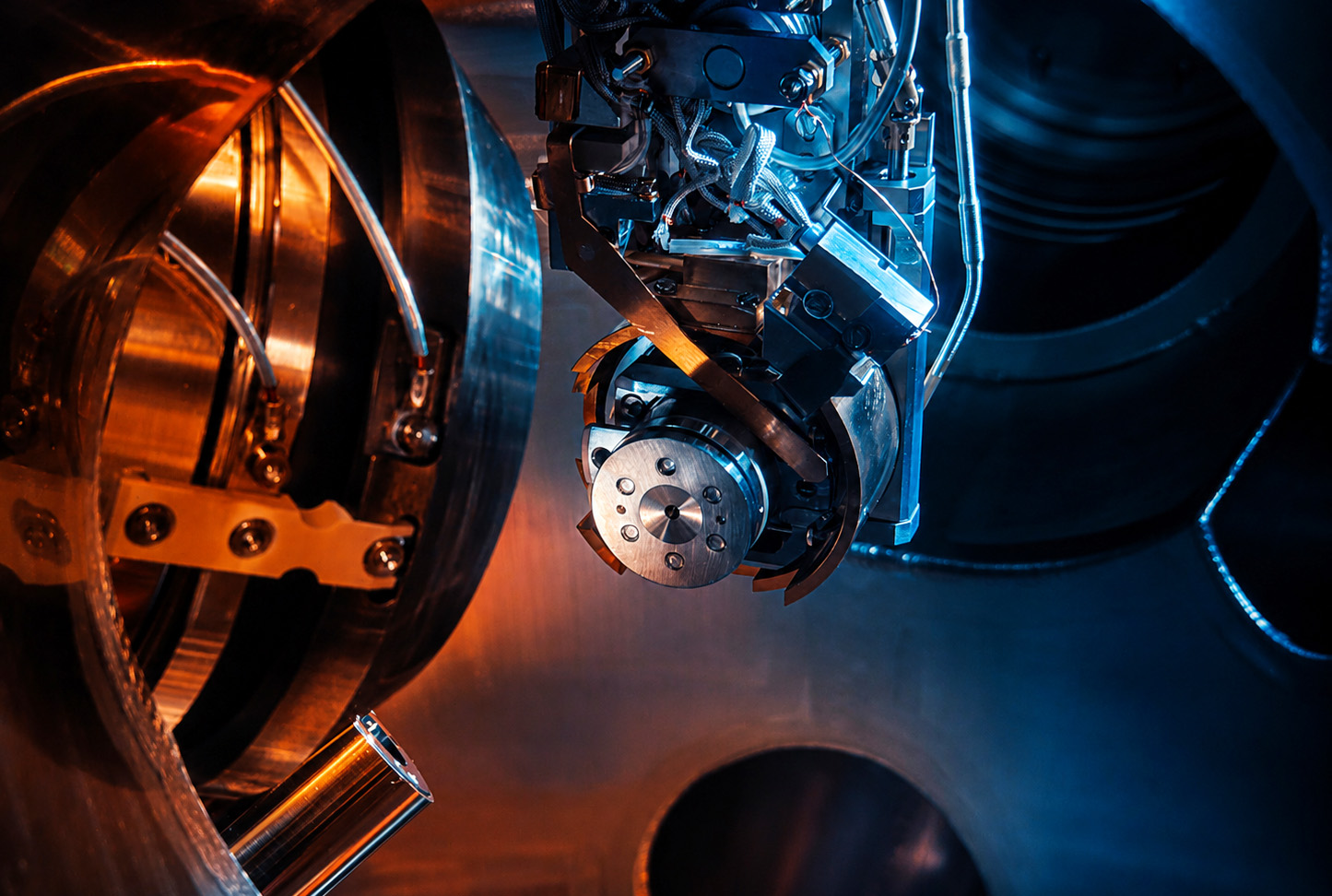
Although solid-state batteries (SSBs) demonstrate high performance and are intrinsically safe, their capacity currently declines rapidly. A team from the TU Wien, Humboldt-University Berlin and HZB has now analysed a TiS₂|Li₃YCl₆ solid-state half-cell in operando at BESSY II using a special sample environment that allows for non-destructive investigation under real operating conditions. Data obtained by combination of soft and hard X-ray photoelectron spectroscopy (XPS and HAXPES) revealed a new degradation mechanism that had not previously been identified in solid-state batteries. They have gained some surprising insights, particularly regarding the harmful role played by intrinsic oxygen. This study provides valuable information for improving design and handling of such batteries.
Solid-state batteries (SSBs) offer several advantages over conventional batteries, including higher energy and power densities, as well as greater safety, as they do not contain flammable liquid electrolytes. However, since lithium ions migrate between the working electrode and the counter-electrode during operation, the solid material can suffer by volume changes, which can lead to cracks. In order to maintain contact between electrodes and electrolyte, SSBs must be operated under high pressure. Volume changes, as well as degradation processes at the interfaces, often limit the lifespan of these batteries. Until now, it has been virtually impossible to observe these processes experimentally, particularly due to the high stacking pressure required during operation. However, Dr Elmar Kataev, a scientist at HZB, has now developed a sample environment that enables operando analysis of SSBs under high pressure using two-colour – soft and hard – X-ray photoelectron spectroscopy (XPS and HAXPES) at the SISSY endstation at BESSY II. These conditions of combining two different energies of X-rays (hard for bulk sensitivity and soft – for surface) hitting the same spot is exclusively available at EMIL beamline.
In collaboration with Dr Katherine Mazzio of the TU Wien, the team has now, for the first time, been able to distinguish between reactions at the surface and at buried interfaces, and analyse the degradation mechanisms of TiS2|Li3YCl6 half-cells in greater detail. ‘We have gained some surprising insights, particularly regarding the harmful role played by intrinsic oxygen. We observed that during cycling oxygen-containing species migrate towards the cathode current collector, where they react with the active electrode material near the current collector interface. This results in the formation of an amorphous layer rich in titanium oxides. This is a major cause of the rapid loss of capacity,’ says Mazzio.
These findings are extremely important for the further development of SSBs. This is because the ingress of oxygen into the battery cells should be reduced or even prevented during production of the constituent materials, prioritizing its manufacturing in under an inert gas atmosphere.
Publication:
ACS Energy Letters (2026): Early Onset Degradation Mechanism in All Solid-State Batteries Revealed by Operando Photoelectron Spectroscopy
Katherine A. Mazzio, Elmar Kataev, Francesco Piccolo, Florian Ruske, Raul Garcia-Diez, Regan Wilks, Marcus Bär, Philipp Adelhelm
DOI: 10.1021/acsenergylett.6c00551
Contact:
Dr. Katherine Mazzio
TU Wien
Research Group for Applied Solid State Chemistry
katherine.mazzio(at)tuwien.ac.at
www.tuwien.at
Dr. Elmar Kataev
Helmholtz-Zentrum Berlin für Materialien und Energie
Department Interface Design
(030) 8062-14941
elmar.kataev(at)helmholtz-berlin.de
Dr. Antonia Rötger
HZB Press Officer
(030) 8062-43733
antonia.roetger(at)helmholtz-berlin.de
www.helmholtz-berlin.de
HZB press release, 8 May 2026